
The Role of AI in Go-to-Market Strategies: Unlocking Growth Potential
- May 4
- 4 min read
Updated: May 4
Launching a product or service into the market is a complex challenge. As a founder, I’ve been in the trenches, juggling limited resources, unclear customer signals, and the pressure to scale fast. Over the years, one thing has become clear: artificial intelligence (AI) is no longer just a buzzword; it’s a game-changer in go-to-market strategies. For startups without dedicated sales teams, especially in Australia, the USA, and the UK, AI offers practical tools to accelerate growth and sharpen market fit.
In this post, I’ll walk you through how AI can transform your go-to-market approach. I’ll share actionable insights and examples that you can apply right away, helping you avoid common pitfalls and make smarter decisions. Whether you’re launching a new app, SaaS product, or innovative service, understanding AI’s role is essential to compete and thrive.
How AI is Shaping Go-to-Market Strategies Today
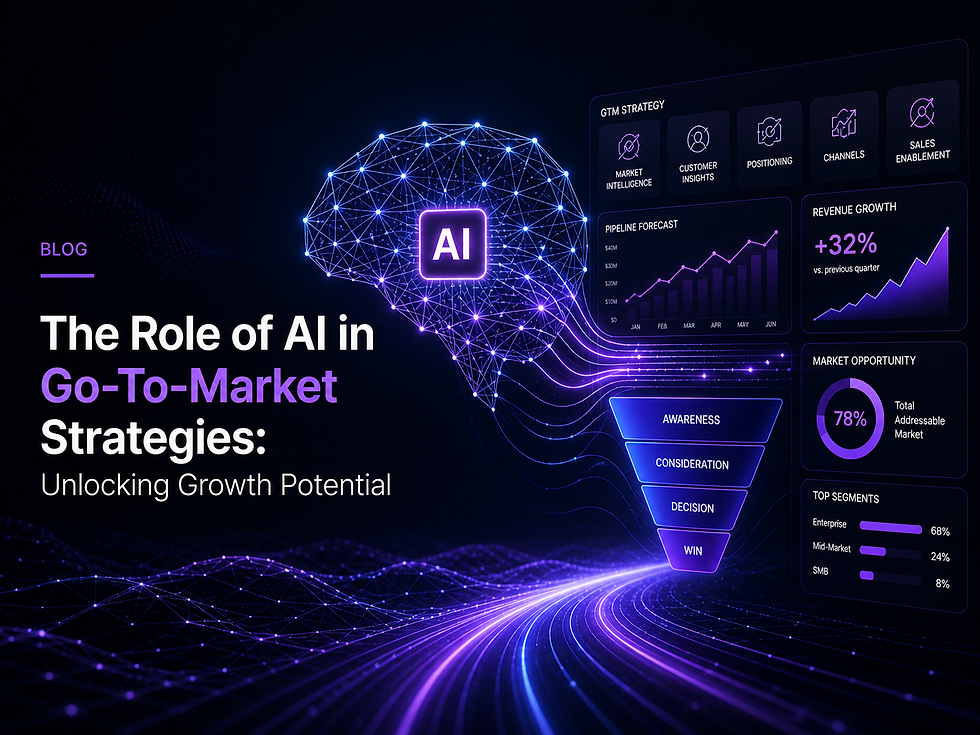
Go-to-market (GTM) strategies involve everything from identifying your target audience to crafting messaging, pricing, and sales tactics. Traditionally, this process relied heavily on intuition, manual research, and trial-and-error. AI changes the game by automating data analysis, predicting customer behaviour, and personalising outreach at scale.
Here’s how AI is impacting GTM strategies:
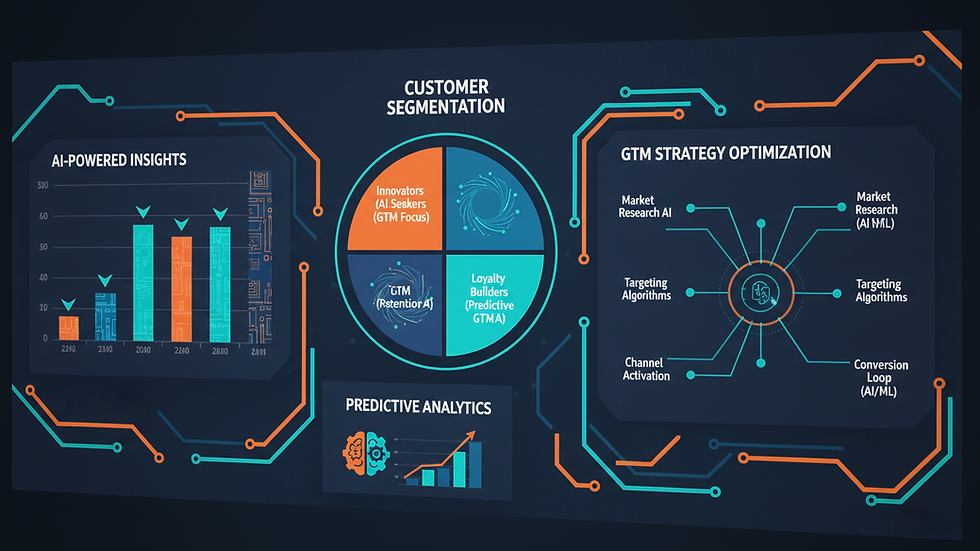
Customer Segmentation: AI algorithms analyse vast datasets to identify distinct customer groups based on behaviour, preferences, and demographics. This means you can target the right people with tailored messages instead of guessing.
Market Research: AI tools scan social media, forums, and review sites to uncover emerging trends and pain points. This real-time insight helps you position your product more effectively.
Sales Forecasting: Machine learning models predict sales outcomes based on historical data and market conditions. This reduces uncertainty and helps allocate resources wisely.
Content Personalisation: AI-driven content engines create customised marketing materials that resonate with different segments, improving engagement and conversion rates.
Pricing Optimization: AI analyses competitor pricing, demand elasticity, and customer willingness to pay, enabling dynamic pricing strategies that maximise revenue.
By integrating AI into your GTM plan, you gain a competitive edge through data-driven decisions and operational efficiency.
Leveraging AI in Go-to-Market for Startups Without Sales Teams
If you’re a non-technical founder without a sales team, AI can feel intimidating. But the truth is, many AI tools are designed to be user-friendly and accessible. You don’t need to be a data scientist to benefit from AI in your GTM strategy.
Here are practical ways to use AI effectively:
Automate Lead Generation and Qualification
AI-powered platforms can identify potential leads by scanning online behaviour and engagement signals. They can also score leads based on likelihood to convert, so you focus your limited time on high-potential prospects.
Create Targeted Campaigns with AI-Driven Insights
Use AI to analyse customer data and segment your audience. Then, craft personalised email sequences or social media ads that speak directly to each group’s needs.
Use Chatbots for Customer Engagement
AI chatbots can handle initial customer queries 24/7, qualifying prospects and even booking meetings. This is invaluable when you don’t have a dedicated sales team.
Monitor Market Sentiment and Competitor Moves
AI tools track online conversations about your industry and competitors. This helps you stay agile and adjust your messaging or product features quickly.
Optimize Your Website and Landing Pages
AI can test different headlines, images, and calls to action to find the best combination that drives conversions.
By embracing these AI applications, you can build a lean but effective GTM engine that scales with your startup.
The Impact of AI on Customer Understanding and Personalisation
One of the biggest challenges in GTM is truly understanding your customers. AI excels at uncovering patterns that humans might miss. For example, AI can analyse customer feedback, purchase history, and browsing behaviour to create detailed personas.
This deep understanding allows you to:
Personalise Marketing Messages: Tailor your communication to address specific pain points and motivations.
Predict Customer Needs: Anticipate what features or services customers might want next.
Improve Customer Experience: Deliver relevant content and support at the right time, increasing satisfaction and loyalty.
Imagine launching a new feature and using AI to identify which customer segments will benefit most. You can then target those users with personalised onboarding and support, boosting adoption rates.
Practical Steps to Integrate AI into Your Go-to-Market Strategy
Getting started with AI doesn’t have to be overwhelming. Here’s a step-by-step approach I recommend:
Define Your GTM Goals Clearly
Are you aiming to increase leads, improve conversion rates, or reduce churn? Clear goals help you choose the right AI tools.
Collect and Organise Your Data
Gather customer data from CRM, website analytics, social media, and other sources. Clean and structure this data for AI analysis.
Choose AI Tools That Fit Your Needs
Look for platforms that offer automation, predictive analytics, or personalisation features relevant to your goals. Many tools offer free trials or tiered pricing.
Test AI-Driven Campaigns in Small Batches
Run pilot campaigns to measure AI’s impact before scaling. Use A/B testing to compare results.
Iterate Based on Insights
Use AI-generated reports to refine your messaging, targeting, and pricing continuously.
Train Your Team
Even if you don’t have a sales team, ensure anyone involved in marketing or customer engagement understands how to use AI tools effectively.
For founders looking to deepen their understanding, exploring resources on using ai for go-to-market plan can provide valuable frameworks and case studies.
Looking Ahead: AI as a Partner in Startup Growth
AI is not a magic bullet, but it is a powerful partner in your go-to-market journey. It helps you move faster, reduce guesswork, and connect with customers more meaningfully. For startups in Australia, the USA, and the UK, integrating AI into your GTM strategy can be the difference between stagnation and 10x growth.
As AI technology evolves, expect even more sophisticated tools that blend predictive analytics, natural language processing, and automation. Staying informed and adaptable will keep you ahead of the curve.
Remember, the key is to start small, focus on your unique business needs, and build AI capabilities that complement your vision. With the right approach, AI can unlock new opportunities and accelerate your path to market success.
By embracing AI in your go-to-market strategy, you’re not just adopting technology—you’re transforming how your startup grows and competes. The future belongs to those who harness AI thoughtfully and strategically.


Comments